飛騨高山では、絵馬は人々の願いを神仏に届ける神聖な祈願の道具として、古くから人々の暮らしに深く根付いています。
In Hida Takayama, ema—votive plaques used to convey prayers and wishes—have long been an integral part of daily life. These sacred objects serve as a spiritual bridge between people and the divine.
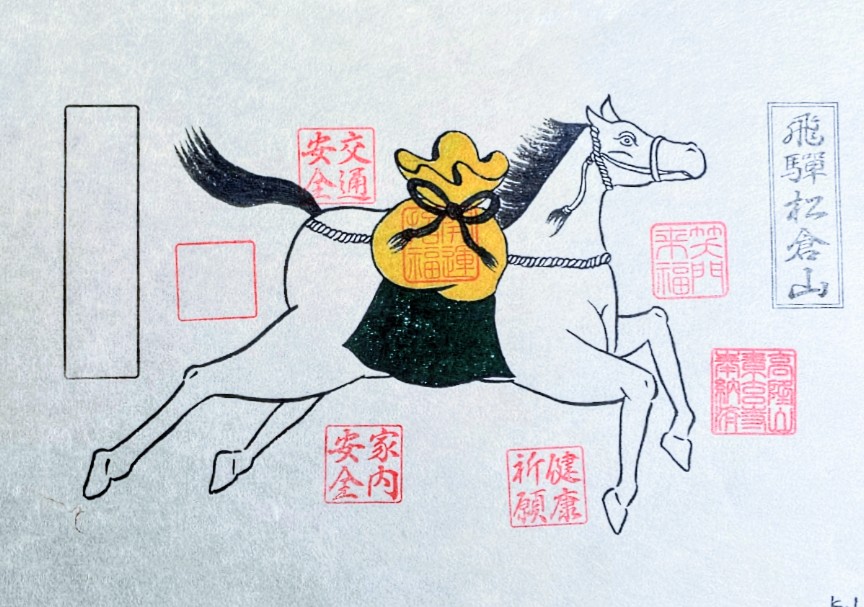
絵馬の起源は、神が馬に乗って現れるという古代の信仰に由来します。かつては本物の馬を奉納していましたが、時代とともに木や紙に馬を描いた絵馬が使われるようになりました。飛騨地方では特に紙絵馬が盛んで、馬の絵には宝袋や縁起物が描かれ、玄関に貼ることで「福を家に呼び込む」と信じられています。
The origin of ema lies in the ancient belief that deities would appear riding horses. In the past, real horses were offered to the gods, but over time, this practice evolved into offering wooden or paper plaques depicting horses. In the Hida region, paper ema are especially popular. These often feature horses adorned with treasure bags and other auspicious symbols. It is believed that placing them at the entrance of a home invites good fortune and blessings.
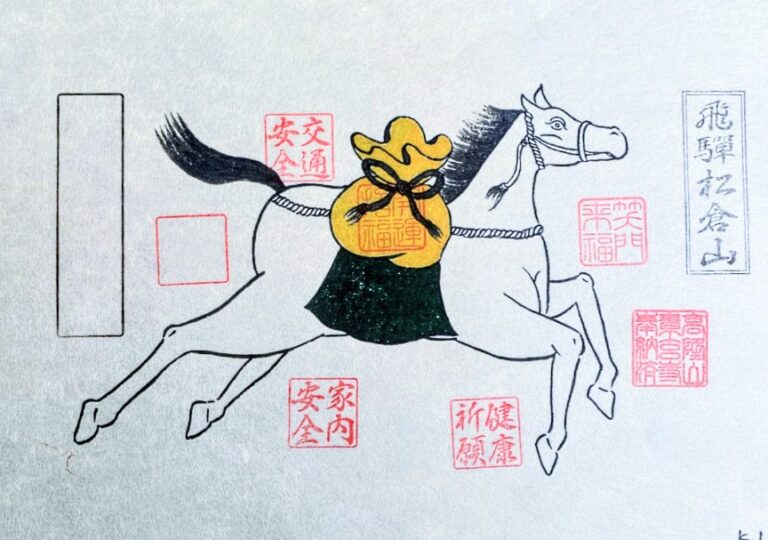
U.Gの所在地であるここ高山市八軒町筋や素玄寺等で毎年8月9日、10日に「松倉絵馬市」が開催されます。八軒町は、かつて紙絵馬を売る店が軒を連ねていた通りであり、現在も伝統を守る店舗が残っています。特に「池本屋」は江戸時代から約200年続く絵馬づくりの老舗で、現在も6代目が手描きで絵馬を制作され、地元や遠方から多くの人々が訪れます。松倉絵馬市の起源は、飛騨国城主・金森家の庇護を受けた「松倉観音堂」にあります。旧暦の7月9日には養蚕の繁栄を祈って農家が宿泊し、翌10日に馬を飾って参拝する風習がありました。これが紙絵馬を使った現在の絵馬市の始まりです。
The Matsukura Ema Market is held every year on August 9th and 10th in locations such as Sogenji Temple and along Hachikenmachi Street in Takayama City, where U.G. is located. Hachikenmachi was once a bustling street lined with shops selling paper ema (votive horse paintings), and even today, some traditional shops continue to preserve this cultural heritage. Among them, Ikemotoya stands out as a long-established store with a history of over 200 years dating back to the Edo period. The sixth-generation artisan still hand-paints ema, attracting many visitors from both the local area and afar. The origin of the Matsukura Ema Market lies in Matsukura Kannon-do, which was under the patronage of the Kanamori clan, the feudal lords of Hida Province. On the 9th day of the 7th month in the old lunar calendar, farmers would stay overnight to pray for the prosperity of sericulture, and on the following day, the 10th, they would decorate horses and visit the temple. This tradition eventually evolved into the current ema market using paper ema.
U.Gの絵馬は、高山の名刹・素玄寺(そげんじ)にて、僧侶によって正式に祈願されたものです。素玄寺は、江戸時代に高山城主・金森長近公の菩提寺として建立された由緒ある寺院で、現在も地域の信仰を集めています。U.G.の絵馬に使う無形文化財の「山中和紙」は飛騨市河合町で800年以上の歴史を持ち、厳寒の気候と清らかな山水を活かした伝統的な製法で作られています。手作業で漉かれるこの和紙は、飛騨の自然と職人の魂が込められた逸品であり、その絵馬一枚一枚には、願いと敬虔な思いが込められ、時を超えて信仰のかたちを今に伝えています。
The ema are made from Yamanaka “washi”, a traditional handmade paper with over 800 years of history, produced in Kawai Town, Hida City. Created using pure mountain water and in the harsh winter climate, this washi is crafted entirely by hand, embodying the spirit of Hida’s nature and artisanship. Each ema carries heartfelt wishes and reverence, preserving the form of faith across generations.
飛騨絵馬は、願いを込めて素玄寺で祈願された後、お客様のもとへ届けられます。玄関に貼ることで、家内安全、商売繁盛、健康祈願など、さまざまなご利益があるとされています。
After being blessed at Sogenji, the ema are delivered to guests. When placed at the entrance of a home, they are believed to bring various blessings such as household safety, business prosperity, and good health.
ユネスコ無形文化財に登録されている、高山祭(春・秋)では、夜になると屋台に約100個もの提灯が灯され、幻想的な雰囲を演出します。提灯は屋台ごとに異なる意匠が施されており、台紋(たいもん)や祭神の威光を称える文字が描かれています。形状もさまざまで、丸提灯や長提灯などがあり、地域ごとの特色が表れています。祭礼区域では、各家庭の軒先にも提灯が飾られ、祭の賑わいを演出する存在として地域の絆を象徴しています。その灯りは、過去と現在を結び、飛騨高山の暮らしと心を照らし続けています。
また各神社の例祭の際には、各氏子の家の玄関先などに提灯を掲げるとともに祭礼区域の道路には大箱提灯を設置するのが長年の慣習となっています。また、神社や屋台組ごとに形状や文字、柄が決まっているため100を超える種類があり高山祭を彩ります。
こちらの提灯の家紋である「七宝に花角紋」(しっぽうにはなかくもん)と言います。
七宝紋は、連続する円形の文様の家紋で、円が四方に無限に広がる形状から「四方(しほう)」が転じて「七宝(しっぽう)」と呼ばれるようになりました。この名称は、仏教における七つの宝物(金、銀、瑠璃、玻璃、珊瑚、瑪瑙、硨磲)に由来し、吉祥や繁栄、円満、調和、ご縁などの縁起の良い意味が込められています。また、円形が連鎖することから、子孫繁栄や人間関係の広がりを象徴するとされています。歴史的には、奈良時代に大陸から伝わり、有職文様として公家や武家の装飾に用いられました。
花角紋は、菱形を基調とした正方形のデザインで、花をモチーフにした家紋Fらり角が立った正方形の形状が特徴です。花を象徴することから、自然の美しさや優雅さ、生命力を表すとされています。花角紋自体は、繁栄や家系の永続性を象徴するものとして、武家や公家で使用されることがありました。
「七宝に花角紋」は、七宝紋の円形文様の中央に花角紋を配したデザインです。この組み合わせは、七宝紋の「円満・調和・繁栄」と花角紋の「自然の美・生命力・永続性」を融合させたもので、
家運の繁栄と調和:七宝紋の無限に広がる円形が家系の繁栄と縁の広がりを、花角紋がその美しさと生命力を象徴し、家族や家系の調和と永続を願う。吉祥と優雅さ:七宝の縁起の良さと、花角の優美なデザインが組み合わさることで、幸福と気品を表現。文化的な融合:有職文様としての七宝と、自然を愛でる日本の美意識を反映した花角が融合し、伝統的な価値観を象徴。
飛騨国は、室町時代から戦国時代にかけて、京極氏や姉小路氏などの守護や国司が支配し、江戸時代には金森氏が高山藩を治めました。その後、幕府直轄領となり、高山代官所(後に飛騨郡代)が置かれました。高山市の家紋としては、土岐氏の「桔梗紋」が特に有名で、美濃国守護だった土岐氏の影響が強い地域です。七宝紋や花角紋は、飛騨地域に流入した他の氏族や文化の影響で使用された可能性があります。
飛騨は東西南北の文化が交錯する地域であり、奈良時代から平安時代にかけて大陸から伝わったと言われています。また、高山市では、家紋は仏壇や提灯、着物などに用いられ、家族の歴史や由緒を象徴し、飛騨の伝統工芸(例: 飛騨家具や織物)に影響を与えた文様として使われています。
飛騨高山は、地理的に孤立した地域ながら、奈良時代から都との交流があり、工芸や建築に優れた技術を持っていました(例: 飛騨の匠)。七宝紋や花角紋は、こうした文化交流の中で、仏教や貴族文化の影響を受けた文様として取り入れら、特に、七宝紋の「調和」や「繁栄」の意味は、飛騨の地域社会や祭事(例: 高山祭)にふさわしいモチーフとして受け入れられました。
Takayama Festival Lanterns: A UNESCO Intangible Cultural Heritage
During the Takayama Festival, held in both spring and autumn and registered as a UNESCO Intangible Cultural Heritage, the festival floats (yatai) are illuminated at night with around 100 lanterns each, creating a magical and dreamlike atmosphere.
Each float features uniquely designed lanterns, adorned with family crests (taimon) and calligraphy honoring the divine spirits of the festival. The lanterns vary in shape-round, long, and more reflecting the distinct characteristics of each neighborhood. In the festival area, lanterns are also hung at the entrances of local homes, symbolizing community spirit and enhancing the festive ambiance. These glowing lights connect past and present, continuing to illuminate the lives and hearts of the people of Hida Takayama.
Additionally, during the annual festivals of local shrines, it is a long-standing custom for each parishioner to hang lanterns at their doorways. Large box-shaped lanterns are also placed along the streets within the festival zone.
Each shrine and float group has its own specific lantern shapes, characters, and patterns—resulting in over 100 unique designs that beautifully decorate the Takayama Festival.
This family crest on the lantern is called “Shippō ni Hanakaku-mon” (七宝に花角紋), which translates to “Hanakaku Crest within Shippō Pattern.”
The Shippō crest is a family emblem featuring a continuous circular pattern. Its name derives from the shape of circles expanding infinitely in all directions—originally referred to as “Shiho” (四方, meaning four directions), which later evolved into “Shippō” (七宝, meaning seven treasures). This term originates from Buddhism, referring to seven precious materials: gold, silver, lapis lazuli, crystal, coral, agate, and giant clam shell. The crest symbolizes auspiciousness, prosperity, harmony, completeness, and meaningful connections. Due to its interlinked circular design, it also represents the flourishing of descendants and the expansion of human relationships. Historically, it was introduced from the continent during the Nara period and used as a formal decorative pattern by aristocrats and samurai families.
The Hanakaku crest features a square design based on a diamond shape, with floral motifs and pointed corners. As a symbol of flowers, it represents the beauty of nature, elegance, and vitality. The Hanakaku crest has been used by noble and warrior families to signify prosperity and the continuity of lineage.
The “Shippō ni Hanakaku-mon” design places the Hanakaku crest at the center of the circular Shippō pattern. This combination merges the meanings of the Shippō crest—harmony, prosperity, and completeness—with the Hanakaku crest’s symbolism of natural beauty, vitality, and longevity. Together, they express:
Family prosperity and harmony: The infinitely expanding circles of the Shippō pattern symbolize the growth of the family and its connections, while the Hanakaku crest represents beauty and vitality, wishing for the harmony and longevity of the family lineage.
Auspiciousness and elegance: The auspicious nature of the Shippō pattern combined with the graceful design of the Hanakaku crest conveys happiness and refinement. Cultural fusion: The Shippō pattern, as a formal motif, and the Hanakaku crest, reflecting Japan’s aesthetic appreciation of nature, together symbolize traditional values and cultural integration.Hida Province, from the Muromachi to the Sengoku period, was governed by the Kyōgoku and Anekōji clans as provincial governors. During the Edo period, the Kanamori clan ruled the Takayama Domain. Later, the region became a direct territory of the Tokugawa shogunate, with the Takayama Magistrate’s Office (later the Hida District Office) established. Among family crests associated with Takayama City, the Kikyō crest of the Toki clan—who were governors of Mino Province—is especially well-known, reflecting the strong influence of the Toki family in the region. The use of Shippō and Hanakaku crests may have been influenced by other clans and cultures that entered the Hida region.
Hida is a region where cultures from the east, west, south, and north intersect. It is said that these patterns were introduced from the continent during the Nara to Heian periods. In Takayama City, family crests are used on Buddhist altars, lanterns, and kimono, symbolizing family history and heritage. These patterns have also influenced traditional crafts of Hida, such as Hida furniture and textiles. Despite its geographical isolation, Hida-Takayama maintained cultural exchanges with the capital from the Nara period onward and developed advanced craftsmanship and architectural techniques (e.g., the renowned Hida no Takumi artisans). The Shippō and Hanakaku crests were adopted as motifs influenced by Buddhism and aristocratic culture. In particular, the Shippō crest’s meanings of “harmony” and “prosperity” were embraced as fitting symbols for Hida’s community and festivals, such as the Takayama Festival.
日本人は古来より、木に神が宿ると信じてきました。特に飛騨高山は、山岳信仰や自然崇拝が色濃く残る土地。森や木々は、ただの自然ではなく、神聖な存在として敬われ、祈りの対象となってきました。
Since ancient times, the Japanese have believed that deities dwell within trees. In Hida Takayama, a region deeply rooted in mountain worship and nature reverence, forests and trees are not merely part of the landscape—they are sacred beings, honored and prayed to.
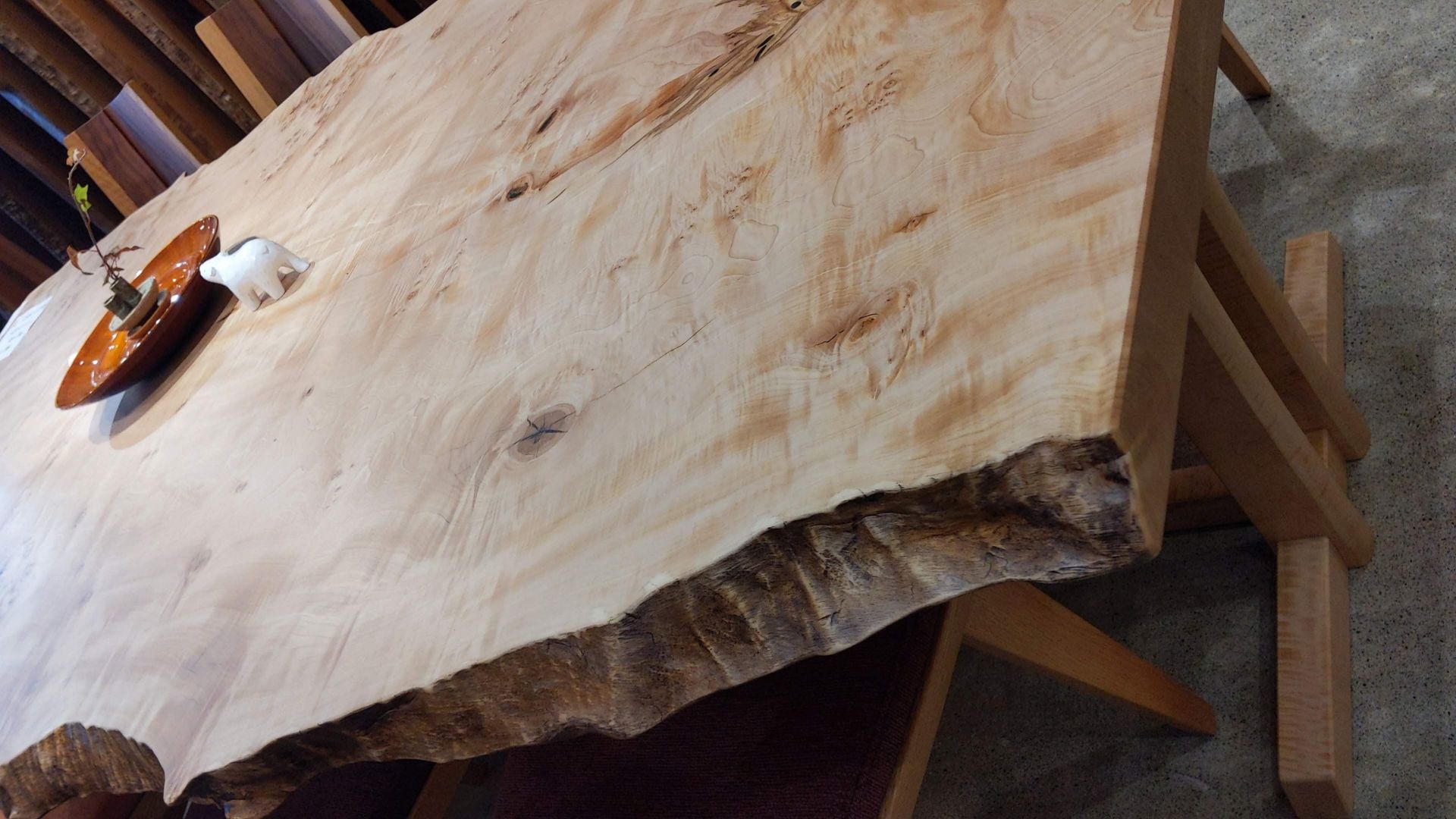
U.G.のラウンジに設置されたこのテーブルは、岐阜の栃ノ木から生まれました。地元の熟練した職人が、バイオリン製作にも用いられる「ブックマッチ製法」で仕上げた貴重な作品です。大きなサイズのブックマッチ制作のためには、左右対称の美しい模様のサイズの大きい丸太を厳選します。製材後は反りや捻じれを防ぐため数年の自然乾燥期間を設け対称性を維持するなど、そのテーブルは希少性が高く、職人の高い技術が求められます。
The grand table in U.G.’s lounge is crafted from Tochinoki (Japanese horse chestnut) sourced from Gifu Prefecture. It is a rare masterpiece finished by a local master artisan using the bookmatch technique, also adopted in violin making.
To create a large bookmatched table, craftsmen carefully select logs with symmetrical and beautiful grain patterns. After cutting, the wood undergoes several years of natural drying to prevent warping and preserve its symmetry. This process demands exceptional skill and results in a truly rare and valuable piece.
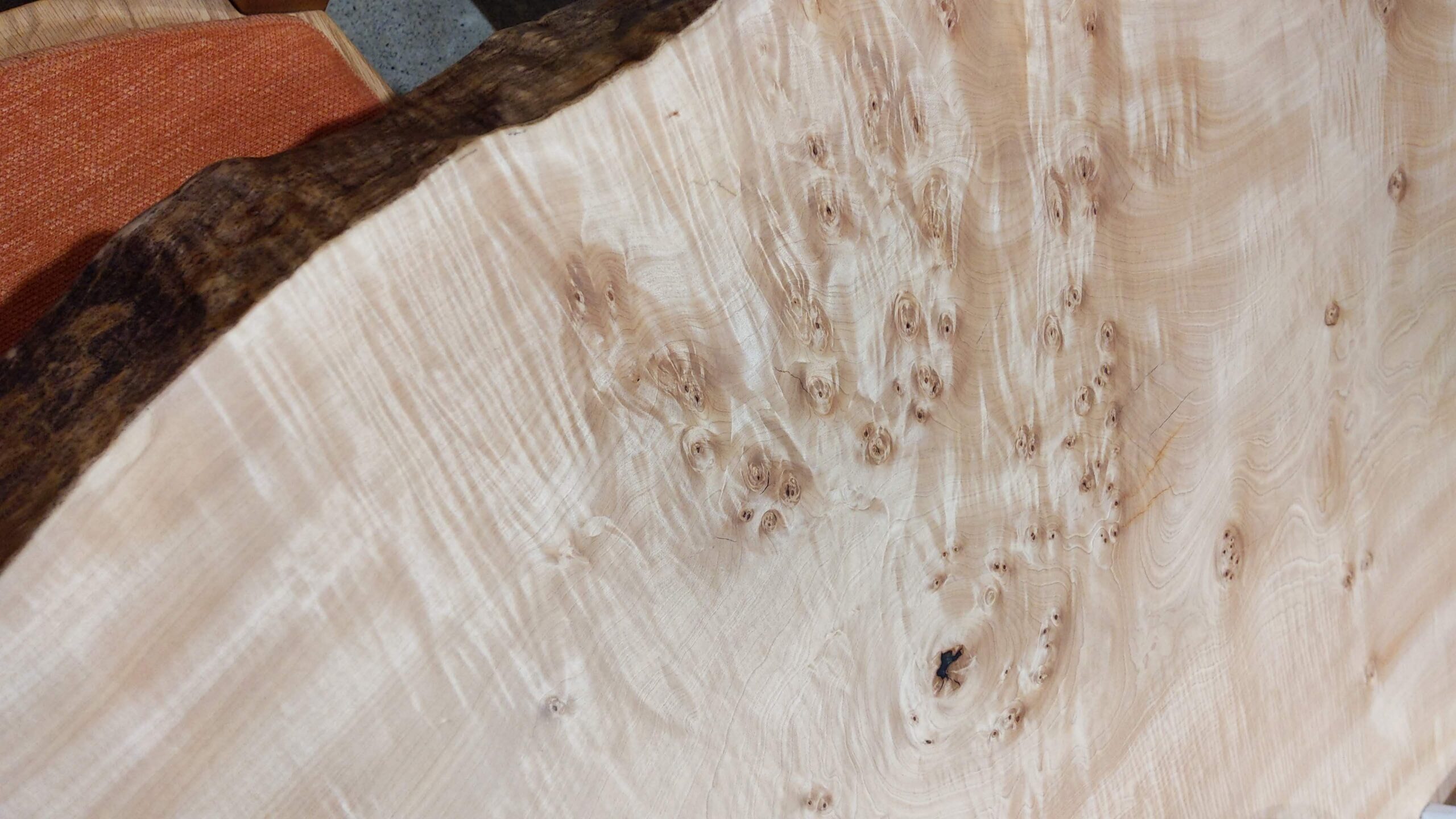
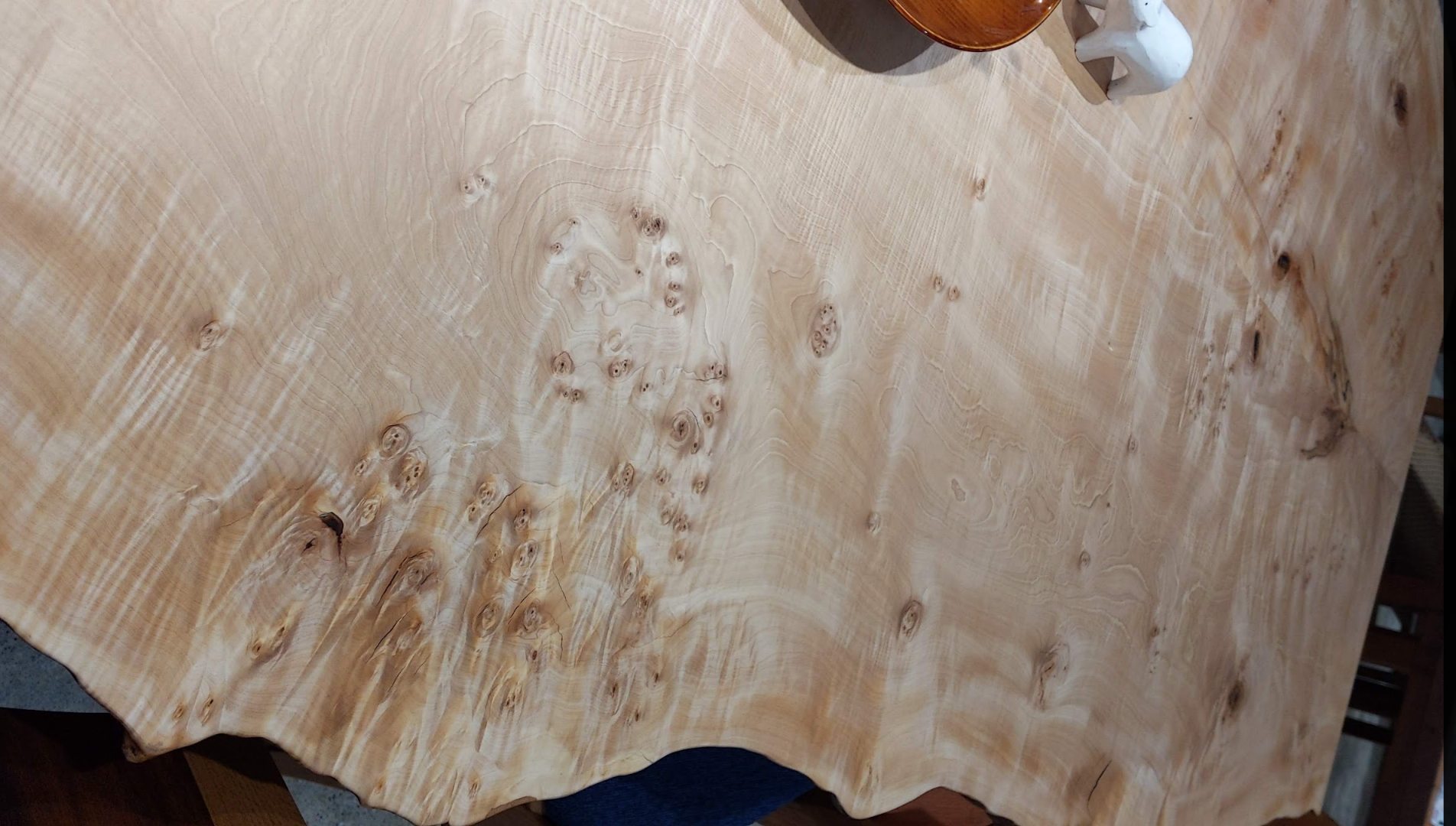
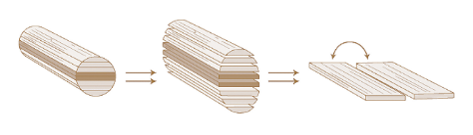
ブックマッチとは、一本の丸太を縦に割り、本を開くように左右対称に貼り合わせる技法です。この手法は、バイオリンや高級家具の製作にも用いられる、精密さと芸術性を極めた技術です。木の繊維や年輪の流れを読み取り、わずかなズレも許されない精度で合わせることで、まるで自然が描いた鏡像のアートのような模様が現れます。
Bookmatching involves splitting a single log vertically and opening it like a book to create a mirrored pattern. This technique, known for its precision and artistry, is used in crafting violins and high-end furniture. By reading the flow of the wood’s fibers and rings and aligning them with meticulous accuracy, artisans reveal patterns that resemble nature’s own symmetrical artwork.
白色の栃の木材は希少価値が高く、光を反射する性質があり明るく清潔感があります。またこのテーブルには、小枝が芽吹く前の「バール模様」が無数に刻まれています。それは、木がこれから枝を伸ばし、葉を広げ、命を育んでいく過程を象徴しており、子孫繁栄、力強い生命力、未来への希望を表しています。
この栃ノ木のテーブルはここU.Gに集う人々の「縁」を結び、「心」を整える空間です。静かに手を添えてみると、木の温もりとともに、飛騨の森の神聖な気配が感じられることと思います。
The white wood of the horse chestnut tree is a rare and highly prized material. Renowned for its luminous quality, it reflects light beautifully, imparting a sense of brightness and purity that evokes elegance and refinement.The table is adorned with countless burl patterns, formed just before small branches begin to sprout. These patterns symbolize the tree’s journey of growth-extending branches, unfurling leaves, and nurturing life. They represent prosperity, vitality, and hope for the future. This Tochinoki table serves as a place where people who gather at U.G. can connect, reflect, and find harmony. When you gently place your hands upon it, you may feel the warmth of the wood and sense the sacred presence of Hida’s forests.